Is 1-Day Garage Floor Coating Really Worth It? (Boise & Meridian Guide)
Everything You Need to Know About 24-Hour Polyaspartic Floor Coatings, Costs, and Long-Term Durability
If you have been looking into garage floor upgrades in Boise, Meridian, or Eagle, you have almost certainly seen local ads promising a brand-new garage floor in just one day.
For homeowners with garages packed with lawnmowers, gym equipment, and vehicles, the idea of getting the entire job done in under 24 hours is hugely appealing. But if you have ever painted a floor or watched concrete cure, it is natural to be skeptical. Is a one-day installation a legitimate engineering breakthrough, or is it a rushed job that will peel in a couple of years?
In this guide, we break down how professional crews complete a full garage floor coating in a single day, what makes the rapid-cure process possible, and whether it is worth the extra investment for your Idaho home.
How Is a 1-Day Installation Even Possible?
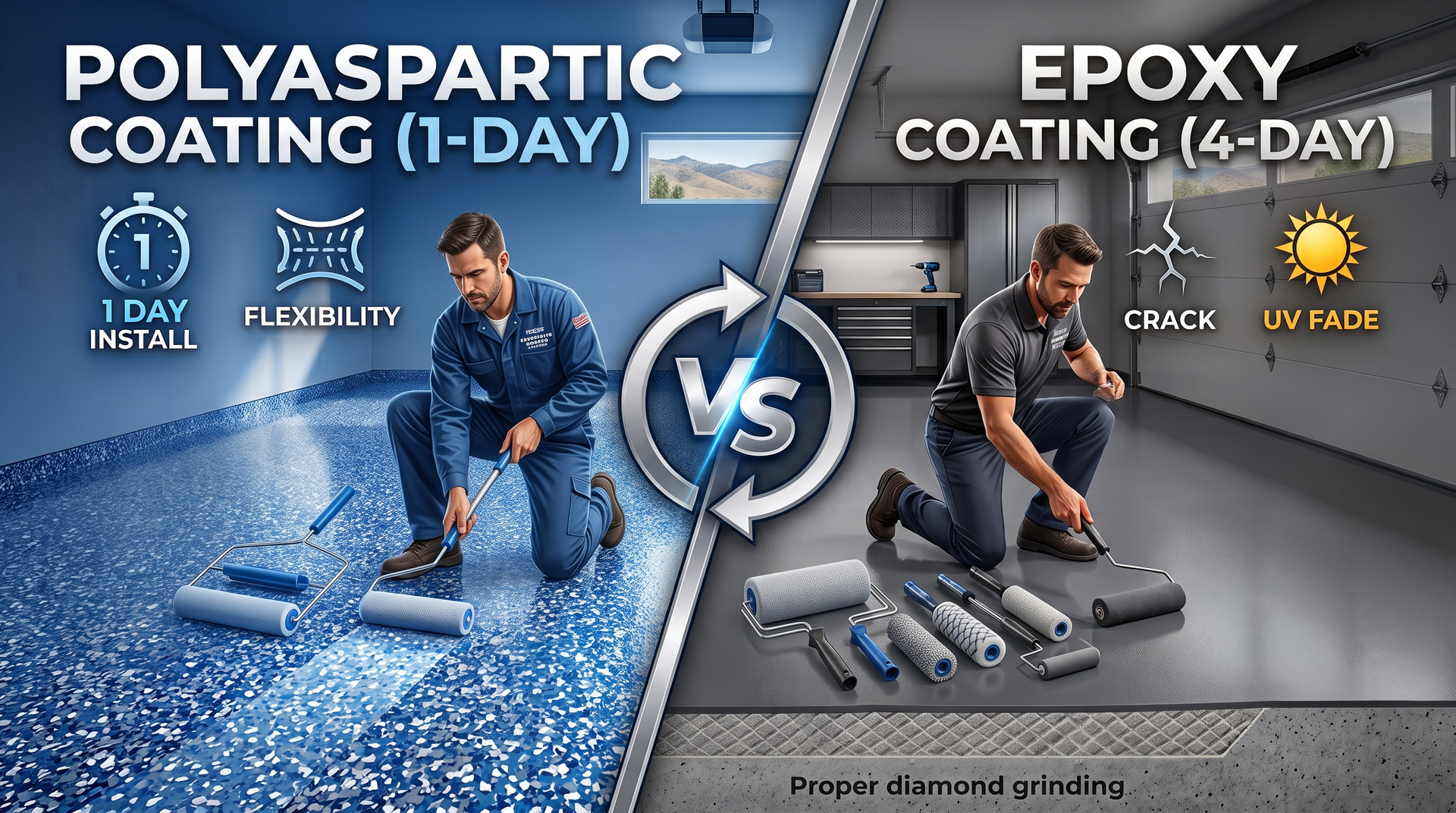
The reason traditional epoxy takes 3 to 5 days to complete comes down to cure time. Epoxy relies on slow chemical evaporative curing, requiring 24 hours between coats before a worker can even step on it.
A true 1-day system uses **polyaspartic coatings** instead of epoxy. Polyaspartic chemistry was originally developed to protect industrial steel structures and bridge decks where long downtime was not an option.
Why Polyaspartic Allows 24-Hour Turnaround
**Rapid Chemical Cross-Linking:** Rather than waiting a full day for moisture to evaporate, polyaspartic coats cure through a fast chemical reaction in 1 to 2 hours per layer.
**Cold-Weather Curing:** Because it cures via chemical reaction rather than heat or ambient drying, polyaspartic can be safely applied in near-freezing temperatures during Treasure Valley winters.
**High-Build Layers:** A single clear topcoat of polyaspartic provides equal or greater protection than multiple thick layers of standard epoxy.
What a 1-Day Installation Day Looks Like
A fast installation does not mean cutting corners on prep work. In fact, because polyaspartic cures quickly, surface preparation must be flawless from minute one. Here is the exact hour-by-hour schedule a professional crew follows:
Hour 1–3: Mechanical Diamond Grinding
The crew uses industrial walk-behind diamond grinders with HEPA dust extractors to open the concrete’s pores (profiling it to CSP-2 or CSP-3 standards). Acid washing is never used, as trapped water prevents 1-day systems from bonding.
Hour 3–4: Rapid Concrete Repair
Cracks, pitting, and spalls are filled with fast-curing polyurea joint fillers. These fillers harden in 20 to 30 minutes and are ground perfectly flush with the slab.
Hour 4–5: Base Coat & Full Flake Broadcast
A polyurea/polyaspartic base coat is applied. While liquid, decorative vinyl color flakes are broadcast across 100% of the floor until the base coat cannot absorb any more flake.
Hour 6–7: Flake Scrape & Clean
Once the base coat sets, workers scrape down high edges of the flakes using flat steel blades to smooth the texture, then vacuum up all loose flake material.
Hour 7–8: Clear Polyaspartic Topcoat
The crew back-rolls a clear, 100% UV-stable polyaspartic topcoat over the flake layer, sealing the entire system.
| Time Elapsed Post-Completion | Permitted Garage Use |
|---|---|
| 4 to 6 Hours | Walking on the floor in socks or soft shoes |
| 12 to 18 Hours | Moving heavy items, patio furniture, and toolboxes back in |
| 24 Hours | Parking full-sized cars, trucks, and SUVs inside |
Why Idaho Homeowners Choose 1-Day Systems
For Treasure Valley residents, the decision to go with a 1-day polyaspartic floor usually comes down to three practical advantages:
1. Driveway Disruption
With a multi-day epoxy install, your garage contents—lawnmowers, power tools, sporting gear, and vehicles—must sit outside on your driveway or street for 4 to 6 days. In Idaho's unpredictable weather, leaving thousands of dollars of equipment exposed to rain, summer heat, or winter frost is a massive headache.
2. Year-Round Installation Capability
Standard epoxy requires ambient temperatures above 50°F to 55°F to cure properly. If you want your garage floor done in November, January, or March, standard epoxy is rarely an option. Polyaspartic systems can be installed down to freezing temperatures without sacrificing bond strength.
3. Road Salt Resistance
Winter driving on I-84 or local highways coats vehicle undercarriages with chemical de-icers like magnesium chloride. When snow melts off your car in the garage, polyaspartic topcoats prevent those corrosive salts from reaching and breaking down the concrete beneath.
Cost Comparison: 1-Day Systems vs. Alternatives
**DIY Epoxy Kits ($300 – $800 total):** Cheap upfront, but takes 3–5 days to dry and frequently peels off under hot tires within 12 to 24 months.
**Professional Multi-Day Epoxy ($4.00 – $7.00 / sq. ft.):** Solid durability, but leaves your garage unusable for nearly a week and can turn yellow near garage door openings due to sun exposure.
**Professional 1-Day Polyaspartic ($5.50 – $9.00 / sq. ft.):** Higher initial cost, but delivers 24-hour vehicle return, a 15–20+ year lifespan, 100% UV stability, and zero hot-tire pick-up.
Frequently Asked Questions
Does completing the job in 1 day mean the crew skips floor prep?
No. Surface preparation actually takes up the majority of the installation day. Professional crews spend the first 3 to 4 hours grinding the concrete with heavy diamond equipment and repairing cracks before any liquid coating touches the floor. The speed comes entirely from chemical cure rates, not skipped steps.
What happens if I park my truck on the floor before the 24-hour mark?
Vehicles weigh thousands of pounds and generate heat at the tire contact points. Parking earlier than 24 hours can cause "hot-tire pick-up" or leave indentations in the topcoat while the chemical bonding reaction completes its final hardening stage.
Why can't I buy a 1-day system at a big-box store and do it myself?
Because polyaspartic coatings cure in 1 to 2 hours, they have a short "pot life" (the time liquid material remains workable in the bucket). Professional teams work in coordinated pairs to mix, pour, and roll the material within minutes. Without industrial grinding equipment and a trained multi-person crew, a DIY attempt almost always results in material hardening mid-application.
How does the odor during a 1-day install compare to standard epoxy?
Polyaspartic coatings do have a chemical odor during application, but because the material cures so rapidly, the fumes dissipate within a few hours. In contrast, traditional solvent-based epoxies off-gas strong fumes into your home for several days.
The Decision: Is It Worth It?
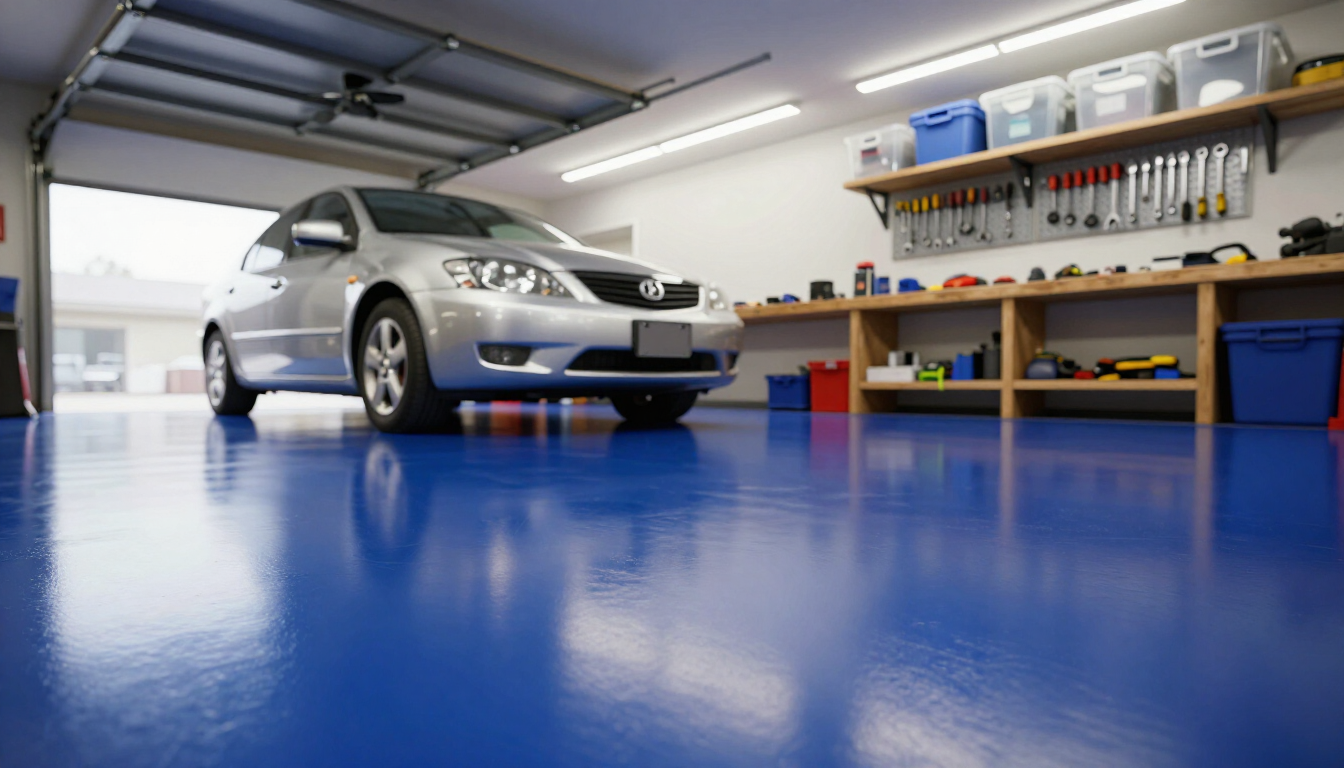
If you value **minimal downtime, year-round installation options, and a floor that will not turn yellow in the sun or peel under hot tires**, a 1-day polyaspartic floor coating is well worth the investment.
Transform Your Garage in Just 24 Hours
Ready to get your garage back in a single day?
Contact **Boise Meridian Epoxy** to schedule your free on-site estimate:
* View our floor styles and finishes on our Garage Floor Epoxy Page.
* Serving Boise, Meridian, Eagle, Star, and Middleton. Request your consultation directly at our Free Quote Page.
Recent Posts